Organizing for Easier Mornings

Organizing for Easier Mornings
What if your mornings were just easier? A little organization today can make tomorrow run much more smoothly.
Mornings have a way of magnifying every little inconvenience.
Where are my keys?
Did I put that paper in my bag?
What am I going to wear?
Where did I leave my glasses?
Do I have anything for breakfast?
None of these things is a major problem on its own. But when several happen before you've even finished your first cup of coffee, the day can start feeling rushed before it has really begun.
That's where organization can make a surprisingly big difference.
Not the kind of organization that requires matching bins or a perfectly arranged pantry.
The kind that simply removes friction from your day.
And when you make life a little easier tonight, your future self will thank you tomorrow morning.
Pay Attention to What Slows You Down
Before changing anything, notice where your mornings tend to go sideways.
Maybe you're searching for something.
Maybe you're making too many decisions.
Maybe you're walking back and forth through the house gathering things.
Maybe something you use every morning isn't stored anywhere near where you actually use it.
Those little annoyances are clues.
Instead of asking, "How can I be more organized?" ask:
"What could I change so I don't have to think about this every morning?"
That question leads to much more useful solutions.
Give Your Keys, Wallet and Everyday Essentials a Landing Spot
If you regularly search for keys, glasses, your wallet, or anything else you need before leaving home, create one designated landing spot.
Ideally, put it near the place where those things naturally come out of your hands.
Maybe that's a small tray near the kitchen.
A bowl on a console table.
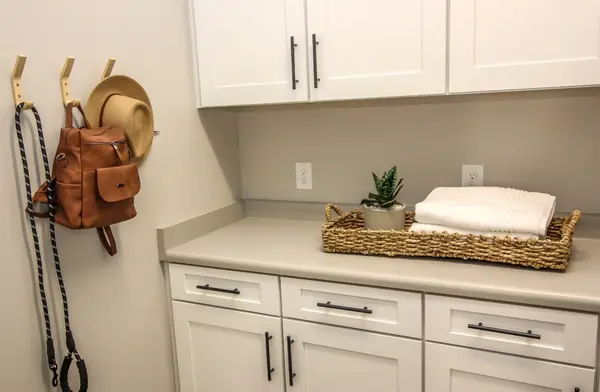
A hook beside the door.
The exact solution doesn't matter.
Consistency does.
And don't create a system based on where you think these things should go. Put it where you naturally leave them.
That's exactly the principle behind Why Your Organizing Systems Stop Working — And When to Change Them: the best organizing system isn't necessarily the prettiest one. It's the one you actually use.
Make Your Entryway Work Harder
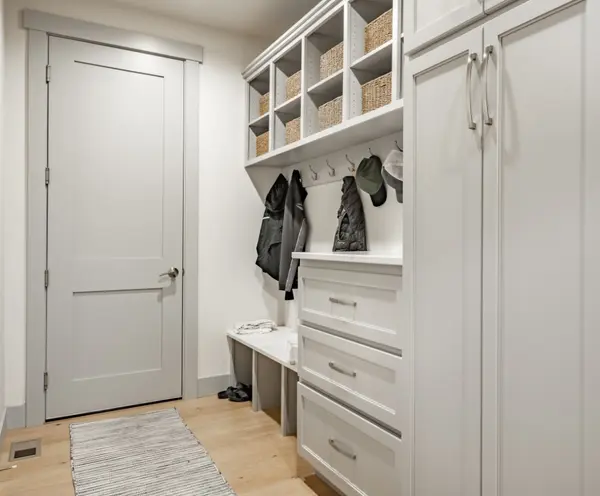
The area around the door can either make leaving the house easier or become one more source of chaos.
Think about what regularly leaves the house with you.
A purse or work bag.
Reusable shopping bags.
An umbrella.
A jacket.
Shoes.
Items that need to be returned.
Give those things logical homes near your exit whenever possible.
You shouldn't have to tour the entire house every morning gathering what you need.
And if something needs to leave with you tomorrow, put it by the door tonight.
It's a tiny habit with a surprisingly satisfying payoff.
Your future self will thank you.
Reduce Morning Clothing Decisions
How much time do you spend deciding what to wear?
A crowded closet can make that decision harder, not easier.
When you're looking past clothing that doesn't fit, doesn't feel comfortable, or no longer suits your life, you're creating unnecessary decisions first thing in the morning.
Keep the things you actually wear accessible.
Move special-occasion and out-of-season clothing elsewhere if you can.
And if tomorrow is going to be particularly busy, choose what you're wearing the night before.
This is one of those areas where having fewer decisions can create a noticeable sense of ease, something I explore more deeply in Decision Fatigue and Clutter: How to Make Choices Easier.
Make Breakfast Require Less Thought
You don't need a color-coded pantry to make mornings easier.
You just need the things you use to be easy to reach.
If you drink coffee every morning, keep the coffee, filters, mugs and anything else you use nearby.
If you eat the same few breakfasts regularly, group those foods together.
If you pack lunch, designate one section of the refrigerator or pantry for grab-and-go items.
The goal is simple:
Reduce the number of steps between you and what you're trying to accomplish.
Those few saved minutes may not seem important, but eliminating unnecessary steps makes a home feel much easier to live in.
Give Paperwork Somewhere to Go
Paper has an incredible ability to become an emergency at exactly the wrong moment.
The form you need.
The bill you meant to mail.
The invitation with the address on it.
Instead of letting important papers disappear into piles, create one designated place for anything requiring action.
Not six places.
One.
A tray, folder, or small basket can be enough.
The simpler the system, the more likely you'll use it.
And if paper is already taking over more than one area of your home, The Paper You're Afraid to Throw Away (and What You Can Actually Let Go Of) can help you decide what actually deserves to stay.
Do a Five-Minute Evening Reset
One of the easiest ways to improve your morning happens the night before.
Take five minutes and ask:
What do I need tomorrow?
Put the dishes away.
Clear the kitchen counter.
Check your calendar.
Put what you need by the door.
Set out anything you'll want first thing in the morning.
This isn't about becoming rigid or creating another chore.
It's about doing something when you have a little more time so you don't have to do it when you don't.
Think of it as leaving a small gift for tomorrow's version of you.
That's the same idea behind Your Future Self Will Thank You for This. Good organization isn't only about making your home look better today. It's about making your life easier later.
Don't Try to Create a Perfect Morning
Your morning doesn't need to look like an advertisement.
Things will still go wrong.
You'll oversleep.
You'll forget something.
The cat will decide that five minutes before you need to leave is the perfect time to cause trouble.
Life happens.
The goal isn't eliminating every inconvenience.
It's eliminating the predictable ones.
If you're searching for your keys three mornings a week, that's fixable.
If the kitchen counter makes breakfast difficult every day, that's fixable.
If your bag never seems to contain what you need, that's fixable.
Organization works best when it solves actual problems—not imaginary ones.
Notice How Much Energy Friction Takes
Sometimes we underestimate how exhausting small inconveniences can be.
Searching.
Moving things.
Making repeated decisions.
Remembering where something is.
None of those tasks is particularly difficult.
But together, they take energy.
Your home should help preserve that energy rather than constantly asking for it.
That's something I explored in Home Should Be the Place That Gives You Energy. A well-functioning home doesn't just look organized. It quietly makes everyday life easier.
Final Thought
A smoother morning doesn't require waking up an hour earlier or developing an elaborate routine.
Sometimes it begins with something much simpler.
Put the keys where you actually use them.
Make breakfast easier to grab.
Give important papers one home.
Set tomorrow's bag by the door tonight.
Small changes remove small frustrations.
And when enough of those frustrations disappear, mornings begin to feel different.
Less searching.
Less rushing.
Less thinking.
More ease.
Do one small thing tonight that makes tomorrow morning easier.
Your future self will thank you.
If this resonated, these posts may help you next:
Recent Posts