What Would You Take If You Were Moving Tomorrow?

Here's an organizing exercise that doesn't require buying containers, emptying every closet, or spending an entire weekend sorting through your house.
Walk into a room and pretend you're moving.
Not someday. Tomorrow.
Everything in that room has to be packed into a box, wrapped, carried out of the house, loaded onto a truck, transported somewhere else, carried into your new home, unpacked and given a place to live.
Now look around again.
What would you actually take with you?
It's amazing how differently we see our belongings when we imagine having to move them.
Would You Pay Someone to Move This?
This may be my favorite question to ask when you're having trouble deciding whether something deserves space in your home.
Would I pay someone to move this?
Suddenly, the chair you haven't particularly liked for ten years looks a little different.
So does the box of kitchen equipment in the basement, the extra dishes nobody uses, the stack of old magazines, the clothes you keep skipping over and the furniture you're holding onto because you don't know what else to do with it.
When something has been sitting in the same place for years, keeping it feels free.
Moving makes the cost visible.
There is the cost of packing materials, the physical effort of moving it, the space it takes on a truck and the time spent unpacking it. Even if you're moving yourself, you're still paying with your time and energy.
Then there's the biggest question of all:
Do I want to give this space in my next home too?
Familiar Isn't the Same as Valuable
One reason this exercise works so well is that we become accustomed to the things around us.
After a while, we barely see them.
The extra chair in the bedroom has always been there. The boxes in the basement have been there so long they're practically part of the architecture. The serving pieces in the dining room cabinet haven't been used in years, but there they sit.
Nothing is necessarily wrong with any of it.
It's just familiar.
I explored this idea in What Feels “Normal” in Your Home Might Be Draining You. We can become so accustomed to our surroundings that we stop noticing what we're maintaining, working around or giving space to.
Imagining a move interrupts that familiarity.
For a moment, you're looking at everything as though you have to actively choose it again.
Pretend Everything Has to Earn a Place on the Truck
When I'm working with people who are actually moving, the decisions eventually become unavoidable. Everything has to go somewhere.
Keep it.
Donate it.
Sell it.
Give it to someone.
Throw it away.
Move it.
You don't have to wait until there's a For Sale sign in the yard to make some of those decisions.
Choose one room and imagine that you're paying for every square foot of space on the moving truck. Which things immediately earn their place?
Your favorite chair probably does.
The dishes you use every day do.
The artwork you love does.
The lamp that gives you exactly the right light does.
But what about the things you're already hesitating over?
That hesitation is worth noticing.
Start With Furniture
Furniture makes this exercise particularly easy because moving it requires effort.
Look around the room and ask yourself whether you'd want each piece in another home.
Would you pay movers to wrap and carry that bookcase?
Would you figure out where the oversized chair belongs in a new living room?
Would you make room for the dining set?
Would you take the dresser you've been meaning to replace for eight years?
You don't have to get rid of something simply because your answer is no. You may need it while you're living in your current home.
But you've learned something useful.
The piece is serving a temporary function rather than being something you truly value.
That can change the way you think about replacing it, maintaining it or buying something else to go with it.
Then Look Inside the Furniture
Now open the drawers, cabinets and closets.
This is usually where things get interesting.
Would you carefully pack all 30 coffee mugs?
Every towel?
The kitchen gadgets you haven't used since 2017?
The stack of paperwork you've been meaning to sort?
The clothes you're hoping will fit again?
The decorations that haven't come out of their boxes for the last three holidays?
This isn't an invitation to start throwing things away indiscriminately. It's simply a way of identifying what you value enough to choose again.
That's an important distinction.
In The Hidden Cost of Keeping Too Much, I wrote about the space, attention and maintenance our belongings quietly require. Moving simply makes those costs much easier to see.
Some Things Are Worth Moving Even If They're Not Practical
Not everything has to pass a usefulness test.
I would never suggest that the only things worth keeping are the things you use every week.
Sentimental things matter.
Artwork matters.
Family photographs matter.
The completely impractical object that makes you smile every time you see it matters.
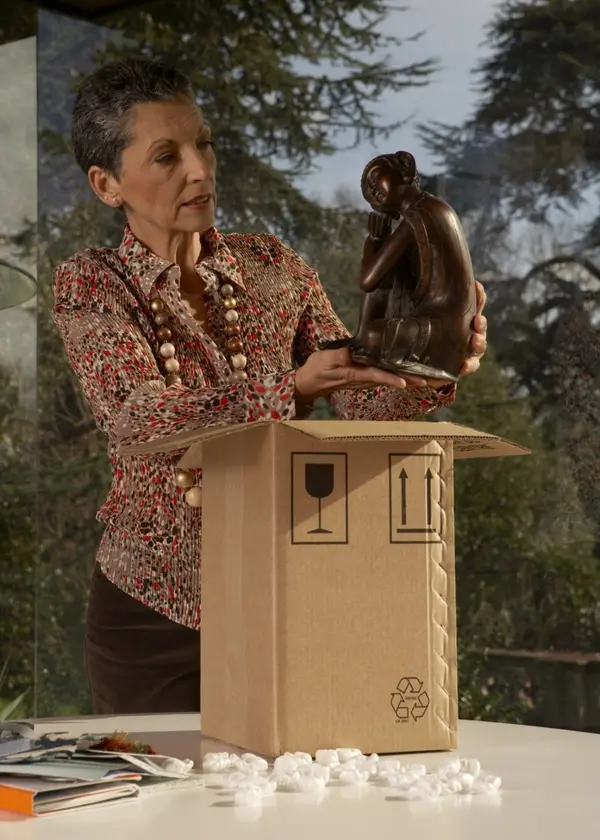
If you would carefully wrap something, put it in a box and make sure it arrived safely at your next home simply because you love it, that's a pretty good indication that it deserves its place.
The goal isn't to reduce your home to necessities.
It's to notice the difference between something you're choosing and something you've simply never chosen to remove.
That distinction is especially important in Why Letting Go Feels Different at This Stage of Life. Our belongings can represent memories, people and earlier versions of ourselves. Sometimes they're absolutely worth carrying forward.
Sometimes they're not.
What About the Things Someone Else Might Want?
Moving also has a way of bringing family belongings to the surface.
The dishes you're saving for your daughter.
The furniture one of the kids might want someday.
The boxes your adult children left behind.
The family pieces nobody wants right now but nobody wants you to get rid of either.
Ask yourself a slightly different question:
Would I pay to move this to another home so I can continue storing it for someone else?
If the answer is no, it may be time for a conversation.
That's exactly the issue behind The Things You're Keeping for Other People. There's nothing wrong with holding something for someone temporarily. But someone else's possible future interest doesn't automatically have to become your permanent storage responsibility.
Think About Where It Would Go
There's another part of the exercise that can be surprisingly revealing.
Imagine you've moved the item.
Now where does it go?
Can you immediately picture the painting on a wall? The books on a shelf? The favorite chair next to a window?
Or are you mentally trying to find somewhere to put something you don't particularly want?
We often assume our next home will somehow have room for everything in our current one.
But would you actually choose a home based on accommodating all of your belongings?
Or would you rather choose the home you want and bring the belongings that support the way you want to live?
That's one of the reasons I wrote The Rooms We Keep for a Life We're No Longer Living. Our homes work best when the space supports our current lives rather than preserving every version of the lives we've already lived.
You May Discover What You'd Never Leave Behind
This exercise isn't only about finding things to get rid of.
It can also show you what really matters.
You may look around your living room and realize you would take almost everything.
You love the sofa. You love the rug. You love the artwork. The table came from your grandmother. The lamp makes the room feel like home.
That's useful too.
Organizing isn't always about having less.
Sometimes it's about becoming clearer about what deserves to stay.
That's part of The Freedom of Having Enough. When you know what you value, you don't have to keep searching for more. You can enjoy what you've already chosen.
Try It With Just One Room
Don't walk around your entire house mentally pricing moving trucks.
Pick one room.
Stand in the doorway and pretend you're leaving.
What gets packed without hesitation?
What makes you pause?
What would you happily leave behind?
What are you only keeping because getting rid of it requires a decision?
You don't even have to act on your answers immediately.
The exercise itself can be useful because it changes the question from:
Should I get rid of this?
to:
Would I choose to bring this with me?
For many people, that's a much easier question to answer.
And If You Really Are Planning to Move...
Then do this sooner rather than later.
As a Realtor, I've seen how overwhelming it can become when years of decisions suddenly have to be made in the weeks before a house goes on the market.
That's when people are already dealing with repairs, paperwork, appointments, showings and all the emotions that come with leaving a home.
It's much easier to make thoughtful decisions when there isn't a moving truck scheduled for Thursday.
If a move is somewhere in your future—even a few years away—gradually deciding what you would and wouldn't take can make that eventual transition much easier.
The Moving Prep Plan: Organizing Before You List Your Home goes into that process more specifically. You don't need to empty your house before selling it, but you also don't want to pay someone to move things you already know you don't want.
Final Thought
You don't have to be moving tomorrow.
You don't have to be moving at all.
But walk into one room today and pretend you are.
Look at the furniture, open a cabinet, glance at the shelves and ask:
Would I pack this?
Would I pay someone to move it?
Would I unpack it?
Would I give it space in another home?
Some answers will be an immediate yes.
Some will surprise you.
And some may make you wonder why you're still giving something space in the home you have now.
A move forces us to choose what comes with us.
There's no reason we can't ask the question before we're going anywhere.
If this resonated, these posts may help you next:
Recent Posts