Before You Buy Another Storage Bin, Do This
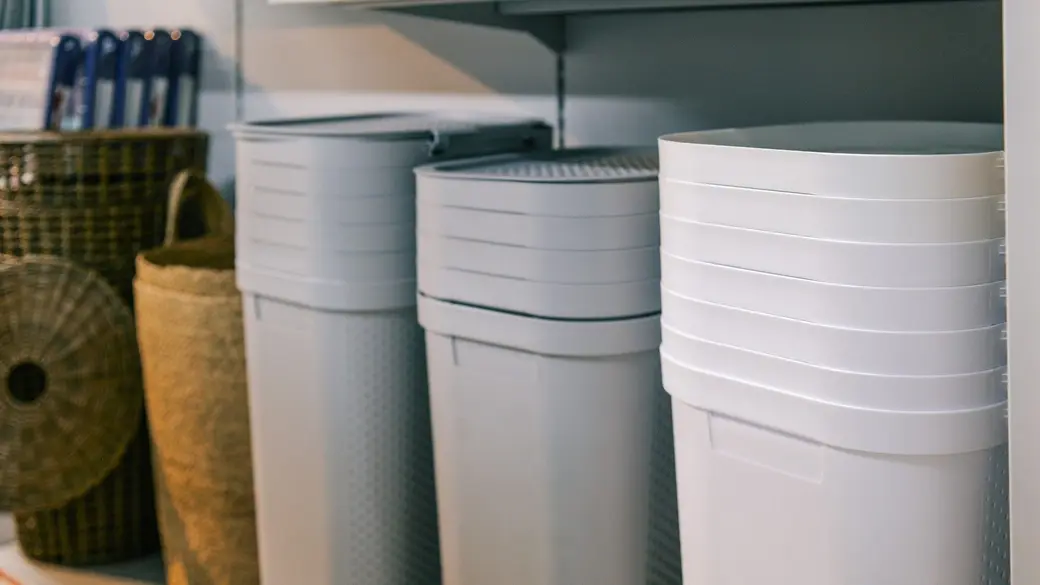
Sometimes the solution to too much stuff isn't better storage.
There is something very satisfying about buying storage containers.
You stand in the aisle looking at rows of matching bins, baskets and boxes and suddenly you can picture it: the closet will finally be organized. The pantry will make sense. The basement shelves will look amazing. Everything will have a place.
So you buy the containers, bring them home and start filling them.
And sometimes it works beautifully.
But sometimes, six months later, you simply have the exact same amount of stuff—only now it's neatly packed into containers.
Before you buy another storage bin, basket, drawer organizer or shelving unit, there's something worth doing first.
Figure out whether the problem is actually storage.
Storage Doesn't Solve Too Much
Storage containers are useful when you have things you need and want to keep, but they need a defined home. They're much less useful when we're using them to avoid deciding what we actually want.
It's very easy to mistake a container problem for a stuff problem.
The linen closet isn't necessarily overflowing because use you need better baskets. You may simply have more towels and sheets than the closet can comfortably hold.
The kitchen cabinets may not need another organizing system. There may be appliances, serving pieces and gadgets you rarely use taking up the best space.
And the basement may not need more shelving. It might need fewer things being stored indefinitely.
That's one of the ideas behind The Hidden Cost of Keeping Too Much. The more we own, the more space, attention and maintenance those belongings require. Putting everything into matching containers doesn't eliminate that cost.
It just makes it prettier.
Edit First
Before buying anything, empty the area you're trying to organize—or at least take out enough that you can see what you're dealing with.
Then edit.
What's expired?
What's broken?
What hasn't been used in years?
What do you have multiples of?
What are you keeping because you forgot you owned it?
What belongs somewhere else?
And what are you keeping simply because there's technically room for it?
You don't have to become ruthless. The goal isn't to get rid of as much as possible. It's to make sure you're not spending money and creating elaborate storage systems for things you don't actually need or want.
If making those decisions is where you tend to get stuck, Decision Fatigue and Clutter: How to Make Choices Easier may help. Sometimes the hardest part of organizing isn't finding a place for something. It's deciding whether it deserves a place at all.
Don't Buy Storage for the Life You Think You Should Have
This happens more often than we realize.
We buy an organizer for the craft supplies we barely use. We create an elaborate filing system for paperwork we could have discarded. We buy containers for clothing that doesn't fit, kitchen equipment we haven't touched in years, or holiday decorations we no longer enjoy putting out.
Suddenly we're not just storing things. We're building infrastructure around them.
That's when it's worth asking whether you're organizing for your actual life or for a version of your life that exists mostly in your head.
I've talked about this before in Organizing for the Life You Live Now (Not the One You Used to Have). Your storage should support what you actually do, wear, cook, enjoy and use—not everything you once did or imagine you might do someday.
Now Look at What's Left
Once you've edited the contents, look at what's actually staying.
This is the point when storage containers become useful.
Maybe all the extra toiletries really do need one basket.
Maybe your winter accessories would be easier to find in two labeled bins.
Maybe the pantry needs a container for snacks because loose packages constantly fall over.
Maybe your wrapping supplies genuinely need a dedicated box.
Now you're solving a specific problem.
Instead of standing in a store thinking, These baskets are cute; I'm sure I can use them somewhere, you know exactly what you're buying and why.
That's a very different kind of organizing.
Measure Before You Shop
This sounds painfully obvious, and yet storage containers have a remarkable ability to be half an inch too wide for the shelf you bought them for.
Measure the space.
Measure the width, depth and height. If you're buying containers for shelves, remember to account for anything that might interfere with pulling them out. If they're going inside a cabinet, make sure the door hinges aren't going to steal an inch of usable space.
Then measure what you're putting inside.
A container that fits the shelf perfectly isn't particularly helpful if the things you need to store don't fit inside it.
Take the measurements with you when you shop. A note on your phone can save you from buying three attractive baskets that end up living in the garage because they didn't fit anywhere else.
Don't Fill Every Available Inch
One of the biggest mistakes we make with storage is assuming that empty space is wasted space.
It isn't.
A closet that is packed from wall to wall may technically be using every available inch, but it can be miserable to use. If you have to remove three things to reach the fourth, the system isn't making your life easier.
The same is true of kitchen cabinets, bathroom drawers, pantry shelves and storage bins. You need enough room to take something out and put it back without rearranging everything around it.
That little bit of breathing room is what makes a system sustainable.
It's also part of the difference between The Difference Between a Clean Home and a Clear Home. A space can be perfectly tidy and still feel overwhelming if every surface, drawer and cabinet is packed to capacity.
Be Careful With Hidden Storage
There's another trap with storage containers: once we can't see something, it's very easy to forget we have it.
Opaque bins can be wonderful for things you don't need frequently, but they're also very good at preserving belongings for years without requiring us to interact with them.
If you have boxes in the basement or attic that haven't been opened since your last move, buying better boxes probably isn't the first step.
Open them.
You may discover things you genuinely want to keep. You may also discover that you've been giving valuable storage space to things you haven't thought about in ten years.
And if your first reaction is, I might need that someday, you may want to revisit What to Do with “Just in Case” Items That Are Taking Over Your Home.
The Best Container Is the One That Makes Something Easier
You don't need matching acrylic containers for everything in your refrigerator.
You don't need identical baskets on every shelf.
And you certainly don't need to transfer every product you buy into another container simply because someone on the internet has a very photogenic pantry.
A good storage solution should make something easier.
It should make an item easier to find, easier to reach, easier to put away or easier to keep together.
If the system creates extra steps, requires constant maintenance or makes you feel like you've failed whenever it doesn't look perfect, it's probably not the right system for you.
That's exactly what I talked about in Why Your Organizing Systems Stop Working — And When to Change Them. The best organizing system isn't the most impressive one. It's the one that works with the way you naturally live.
Use What You Already Have First
Before buying anything, take a quick look around your house.
You may already own a basket that would work perfectly. A shoebox can organize small items inside a drawer. A serving tray can become a landing spot. A container that's no longer needed in one room may solve a problem in another.
Try the system with what you have for a week or two.
If it works, then buy the container you really want.
This has another advantage: you'll know what size and shape you actually need because you've already tested the idea.
Sometimes You Really Do Need the Storage Bin
I'm not anti-storage bin.
Storage containers can be incredibly useful. Seasonal decorations, out-of-season clothing, photographs, keepsakes, hobby supplies and dozens of other things are much easier to manage when they're properly contained.
The difference is that the container should be the last part of the organizing process, not the first.
First decide what belongs.
Then decide where it belongs.
Then determine what would make it easier to store.
And only then go shopping.
Final Thought
The next time you find yourself standing in front of a display of beautiful storage containers thinking, This is going to solve everything, stop for a moment.
Go home and look at the space first.
Edit what you have. Decide what you're keeping. Figure out where it naturally belongs. Measure the space.
Then, if you still need the bin, buy it.
You'll probably need fewer containers than you thought. The ones you do buy will actually fit. And instead of spending money to organize things you don't really want, you'll be creating storage for the things that deserve space in your home.
Sometimes the best organizing purchase is the one you realize you don't need to make.
If this resonated, these posts may help you next: