What Feels “Normal” in Your Home Might Be Draining You
What Feels “Normal” in Your Home Might Be Draining You
We adapt to our surroundings remarkably well.
In fact, we adapt so well that we often stop noticing things that are affecting us every day.
The chair that has become a holding spot for clothes.
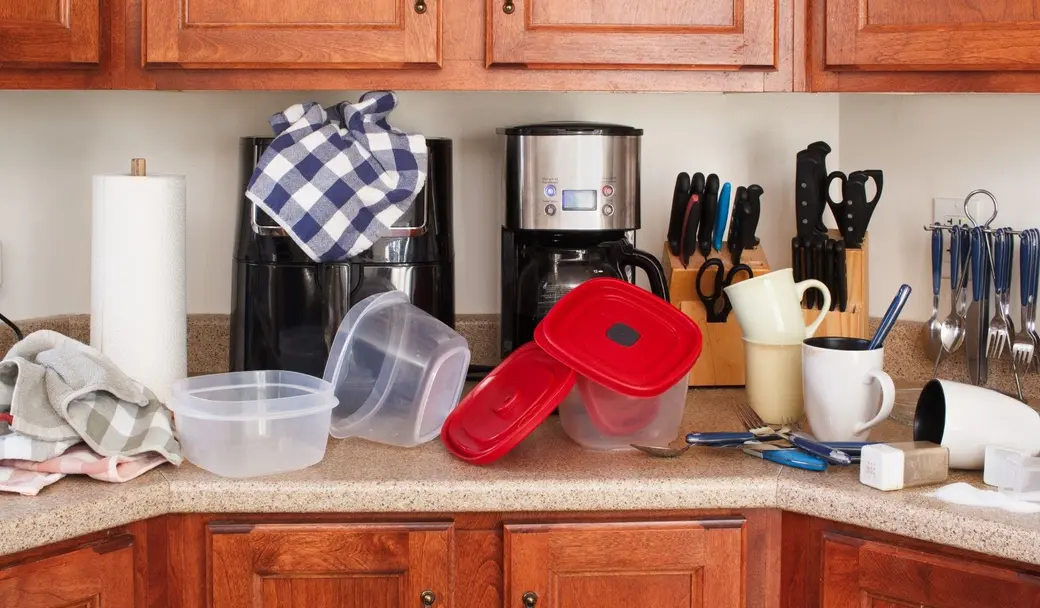
The countertop that's always covered with papers.
The closet that's packed so tightly you avoid opening it.
The room you've stopped using because it's become a storage area.
At some point, these things stop standing out.
They simply become normal.
But what feels normal in your home might actually be draining your energy more than you realize.
We Stop Seeing What We See Every Day
Think about a familiar drive.
You know the route so well that you barely notice the scenery anymore.
The same thing happens inside our homes.
Our brains become accustomed to:
- Crowded surfaces
- Overstuffed closets
- Overflowing drawers
- Piles waiting for attention
Eventually, we stop consciously noticing them.
But that doesn't mean they stop affecting us.
Your eyes may overlook the clutter.
Your nervous system doesn't.
Small Sources of Stress Add Up
Most people think stress comes from major events.
But often, it's the accumulation of small irritations that wears us down.
Every time you:
- Can't find what you're looking for
- Have to move something to access something else
- See a task you haven't completed
- Walk past a pile you've been meaning to address
Your brain registers it.
Individually, these moments seem insignificant.
Together, they create background stress.
This is one reason clutter can feel so exhausting. It's not just the stuff—it's the constant stream of decisions and reminders attached to it, something I explore in Decision Fatigue and Clutter: How to Make Choices Easier.
The Things We Tolerate Become Invisible
One of the most powerful questions you can ask is:
"What have I gotten used to?"
Maybe it's:
- A garage you can't park in
- A guest room that's become a storage room
- Kitchen counters that are never fully clear
- A closet so full that putting things away feels impossible
These situations often feel permanent simply because they've been there for so long.
But normal doesn't always mean helpful.
In fact, many spaces stay cluttered because we've stopped questioning how they're functioning, something I discuss in Why Some Rooms Stay Cluttered No Matter What You Do.
Comfort and Familiarity Are Not the Same Thing
This is where things get interesting.
Many people keep living with systems that no longer work because they're familiar.
The clutter may be frustrating.
The crowded spaces may be inconvenient.
But they've become part of daily life.
Change can feel harder than continuing to tolerate the problem.
That's one reason organizing often requires more awareness than effort.
Before anything changes physically, we have to notice what we've stopped seeing.
Your Home Should Support Your Current Life
As life changes, our homes need to change too.
What worked ten years ago may not work now.
What made sense during one season of life may no longer fit the next.
Yet many homes continue serving old routines, old priorities, and old versions of ourselves.
If you've been feeling a disconnect between your space and your current life, you're not alone. I explore this idea more deeply in Organizing for the Life You Live Now (Not the One You Used to Have).
A Home Can Be Clean and Still Feel Heavy
This surprises people.
You can vacuum.
Dust.
Mop.
Organize.
And still feel unsettled.
Because cleanliness and clarity aren't the same thing.
A clean home removes dirt.
A clear home removes stress.
If you've ever wondered why cleaning doesn't always create the feeling you're looking for, you may enjoy The Difference Between a Clean Home and a Clear Home.
What Happens When You Create Space
When people simplify a room, they often expect the biggest benefit to be visual.
But the real benefit is emotional.
They describe feeling:
- Lighter
- Calmer
- Less distracted
- More at ease
Not because the room is perfect.
Because it requires less from them.
That's one of the hidden lessons behind The Hidden Cost of Keeping Too Much.
Start By Looking With Fresh Eyes
You don't need to declutter your entire home this weekend.
Instead, try this:
Walk into a room and ask:
- What have I stopped noticing?
- What feels harder than it should?
- What no longer supports my daily life?
The answers are often surprisingly obvious once you start looking.
And awareness is where change begins.
Final Thought
Just because something feels normal doesn't mean it's helping you.
Many of the things that quietly drain our energy aren't dramatic.
They're familiar.
They've become part of the background.
But when you start noticing them again, you gain the opportunity to change them.
And often, even small changes create far more relief than we expect.
If this resonated, these posts may help you next:
Recent Posts