What Your Clutter Is Trying to Tell You

What Your Clutter Is Trying to Tell You
Clutter is easy to dismiss as “just stuff.”
Things that need to be put away. Sorted. Dealt with later.
But clutter is rarely random.
More often than not, it’s a message.
Not in an abstract or dramatic way — but in small, quiet signals that something in your space (or your life) is no longer aligned.
And once you start paying attention, you begin to see it differently.
Clutter Isn’t the Problem — It’s the Symptom
Most people think the goal is to get rid of clutter.
But clutter usually forms for a reason:
- A busy schedule that left no time to reset
- A life transition that shifted priorities
- Decisions that were postponed
- Items that no longer have a place — physically or emotionally
Clutter builds when something underneath it hasn’t been addressed yet.
That’s why simply “tidying up” often doesn’t last.
If you’ve ever noticed your space feeling different lately without a clear reason, that awareness is often the first sign that something deeper is shifting — something I talk about more in Why Your Home Feels Different Lately (Even If Nothing Changed).
Different Types of Clutter — Different Messages
Not all clutter is the same. And each kind tends to say something specific.
The “I’ll Deal With It Later” Pile
Mail, papers, small items that keep getting moved.
This often signals:
- Decision fatigue
- Too many small tasks competing for attention
If you feel stuck making even simple choices, it’s not a lack of discipline — it’s mental overload, which I break down in Decision Fatigue and Clutter: How to Make Choices Easier.
The Overflowing Closet
Clothes that don’t quite fit your life anymore.
This can reflect:
- A previous version of your routine
- Roles or expectations that have changed
Sometimes the issue isn’t the closet — it’s that your home is still holding space for a life you’ve already outgrown, something I explore in Organizing for the Life You Live Now (Not the One You Used to Have).
The Room That Never Feels Finished
A space that’s always “almost” organized.
This often points to:
- Lack of clarity about how the space should function
- Trying to make it serve too many purposes
When a room doesn’t have a clear role, decisions become harder and clutter tends to return.
The Things You Can’t Let Go Of
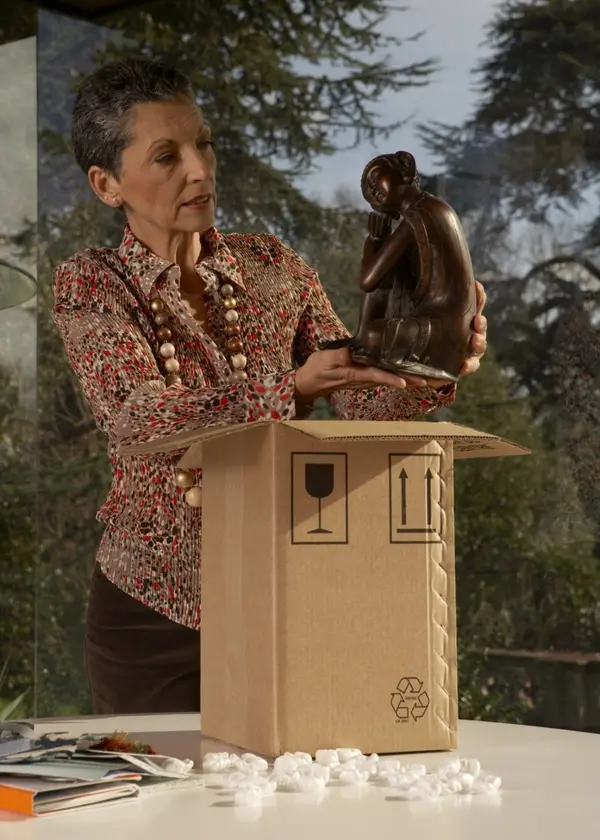
Boxes, keepsakes, items tied to memory or identity.
This isn’t clutter in the traditional sense.
It’s emotional.
And rushing through it rarely works. Giving yourself time and permission to move at your own pace can make the process feel much more manageable — something I talk about in Letting Go Without Rushing: Why There’s No “Right Timeline” for Decluttering.
Clutter Often Shows Up During Transition
Many people notice clutter becoming more visible during times of change:
- Children moving out
- Career shifts
- Thinking about downsizing
- Wanting a simpler lifestyle
In these moments, your home starts to reflect the gap between where you’ve been and where you’re going.
And that can feel uncomfortable.
If you’re in that in-between stage, organizing can help create clarity without forcing decisions — something I walk through in Organizing When You’re Not Sure What’s Next.
What Happens When You Listen Instead of React
Most organizing advice focuses on action:
Sort this. Toss that. Clear everything.
But when you slow down and ask why something is there, the process changes.
You begin to:
- Make more confident decisions
- Let go with less regret
- Keep what actually supports you
And your home starts to feel lighter — not because it’s empty, but because it makes sense.
You Don’t Need to Fix Everything
This is where people get stuck.
They think:
“I need to deal with all of this.”
You don’t.
You just need to start noticing patterns.
Start small:
- One surface
- One drawer
- One category
If you want a simple way to create that kind of shift quickly, focusing on a single space can make a big impact, which I walk through in The One-Room Reset: How to Transform a Space in a Single Afternoon.
Final Thought
Your clutter isn’t random.
It’s not a failure.
It’s not something to feel embarrassed about.
It’s information.
And when you start listening to what it’s telling you, organizing becomes less about getting rid of things — and more about understanding what actually belongs in your life now.
If this resonated, these may help you take the next step:
– Why Your Home Feels Different Lately (Even If Nothing Changed)
– Decision Fatigue and Clutter: How to Make Choices Easier
– Organizing for the Life You Live Now (Not the One You Used to Have)
– Letting Go Without Rushing: Why There’s No “Right Timeline” for Decluttering
– Organizing When You’re Not Sure What’s Next
– The One-Room Reset: How to Transform a Space in a Single Afternoon
Recent Posts